
MODULE 7: ENHANCING GUEST EXPERIENCE AND CONFLICT RESOLUTION
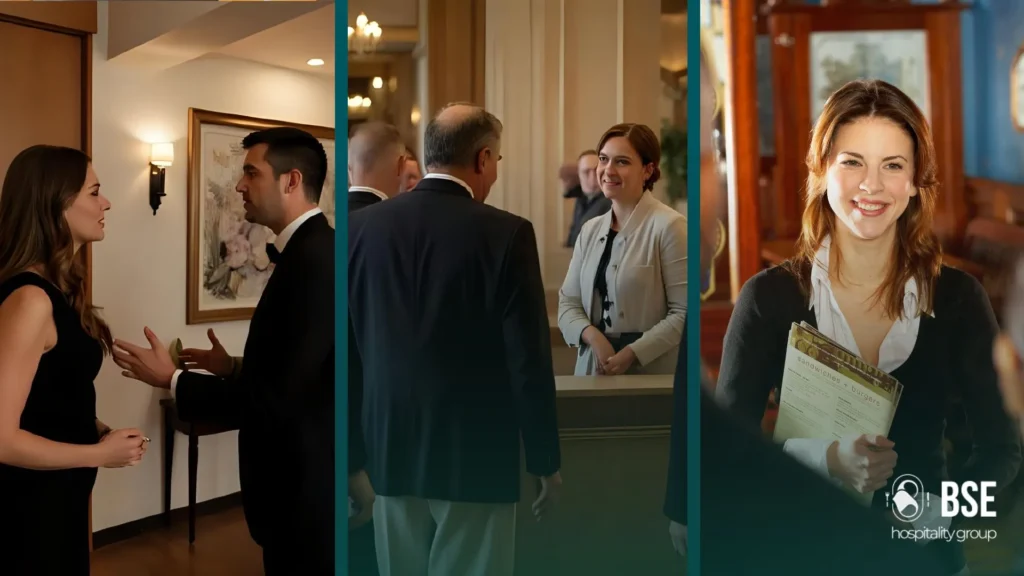
Enhancing the Guest Experience
1. Provide Clear Directions and Assistance
• Smooth guidance: If the venue is large or unfamiliar, offer clear directions to key areas such as the bar, seating, coat check, or restrooms. Proactively helping guests find their way shows attentiveness.
• Address special needs: If you’re aware that a guest has specific needs (reduced mobility, dietary restrictions, language barrier), be prepared to assist or refer them to someone who can help.
2. Anticipate Guest Needs
• Offer personalized service: If possible, recall preferences from previous visits and mention them. For example: “I remember you prefer sparkling water,” or “Would you like the same drink as last time?” Many reservation systems allow hosts to add notes, such as:
a) Favorite tables
b) Preferred drinks
c) Allergies*
3. Know the Event Well
• Be aware of the schedule: Know the event timeline (dinner, speeches, entertainment) so you can keep guests informed and involved.
• Provide information: If guests have questions, know where amenities are located, what activities are planned, and when they’ll take place.
4. Offer a Personalized Experience
• Remember details: Guests appreciate not feeling like “just another customer.” If you recall their preferences or previous interactions, mention them naturally.
• Create special moments: For example, if someone is celebrating a birthday or special occasion, acknowledge it with a toast or a small gesture.
5. Remain Calm and Composed
• Stay calm under pressure: Events can become intense. Maintaining composure provides reassurance to both guests and your team.
• Resolve conflicts diplomatically: If a guest has an issue (wrong seat, incorrect order), handle it professionally. Apologize if necessary and offer a solution.
• Assist with belongings: If a guest needs help with a coat, bag, or other item, offer assistance. Small gestures make a big difference.
6. Facilitate Event Transitions
• Timely announcements: If the event has multiple phases (dinner, speeches, show), guide guests with clear and courteous reminders.
• Assist with seating transitions: When guests move between areas (e.g., from cocktail hour to dinner), help them quickly find their seats.
7. Be Discreet and Respect Privacy
• Know when to step back: While being attentive, also recognize when to give guests space, especially during private conversations or quiet moments.
• Maintain confidentiality: If a guest shares personal information—such as a preference or concern—respect their privacy and do not share it.
8. Host Rotation
- During events with a high volume of guests, it is common to have multiple hostesses working simultaneously. In these situations, a proper host rotation system must be in place. While some hosts may step away from the station to escort guests or assist with seating arrangements, there must always be at least one or two hosts present at the hosting station at all times. This ensures continuity, organization, and responsiveness for arriving guests.
- Host rotation involves alternating responsibilities: when one hostess returns to the station after assisting a guest, the next may leave.
- This process must be coordinated so that the station is never left unattended.
- In smaller events, or in venues where only one hostess is assigned, the approach changes. The hostess may provide directions to the assigned table without leaving the hosting area, or she may briefly escort the guest and return immediately—especially when servers are available to take over guest care at the table.
- The goal is to maintain efficiency, presence, and guest service, adapting the hostess’s role based on the size and structure of the event.
Common Conflict Scenarios and How to Handle Them
1. Guest claims to have a reservation, but it doesn’t appear in the system
• Ask for their name, time, and spelling
• Check for similar names or entries
• Apologize and offer to place them on the waitlist or seat them at the bar if available
2. Guest arrives on time, but their table is not ready
• Apologize for the delay
• Give an estimated wait time and consider offering a complimentary drink
3. Guest doesn’t comply with the dress code
• Kindly explain the dress policy
• Offer alternatives such as outdoor seating or rescheduling their visit
4. Guest arrives late and demands immediate seating
• Check availability without affecting other reservations
• If not possible, offer a new time or suggest waiting at the bar*
5. Guest brings a pet when they’re not allowed
• Politely inform them of the policy
• Offer outdoor seating (if allowed) or suggest takeout as an option
Always maintain professionalism and kindness. The goal is to de-escalate the conflict and offer reasonable alternatives that show respect for both the guest and the business.